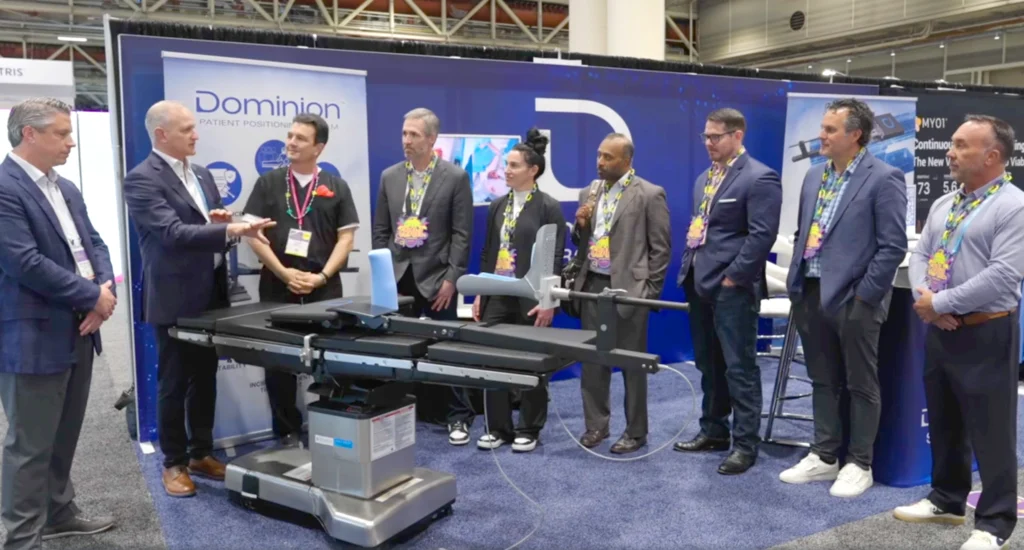
 By Albert Nanni, Chief Executive Officer, Dominion Surgical
Why solving everyday operating room challenges may be just as important as introducing the next big technology.
I’ve spent decades in the orthopedic industry, and one of the biggest changes I’ve witnessed is the movement of procedures, including outpatient hip replacement, from traditional hospitals into ambulatory surgery centers (ASCs).
It’s a shift that makes a lot of sense. Medicare added total knee replacement to the list of procedures it covers in ASCs in 2020, and total hip replacement in 2021. But it also raises a question I don’t think our industry spends enough time considering.
Why are we still expecting ASCs to work around equipment and technology that were largely developed with the traditional hospital environment in mind?
ASCs have a different business model. They don’t have the same resources, space, staffing flexibility, or financial cushion that a large hospital system may have.
Every dollar matters. Every operating room matters. And every decision that affects scheduling, staffing, or efficiency can have a direct impact on the facility’s ability to operate profitably.
That doesn’t mean ASCs should settle for less technology.
It means they need technology that makes sense for the way they do business.
The Economics Are Different for Ambulatory Surgery Centers
A large hospital system may have the resources to invest in expensive capital equipment, dedicate an operating room to a particular procedure, or absorb some of the additional costs associated with new technology.
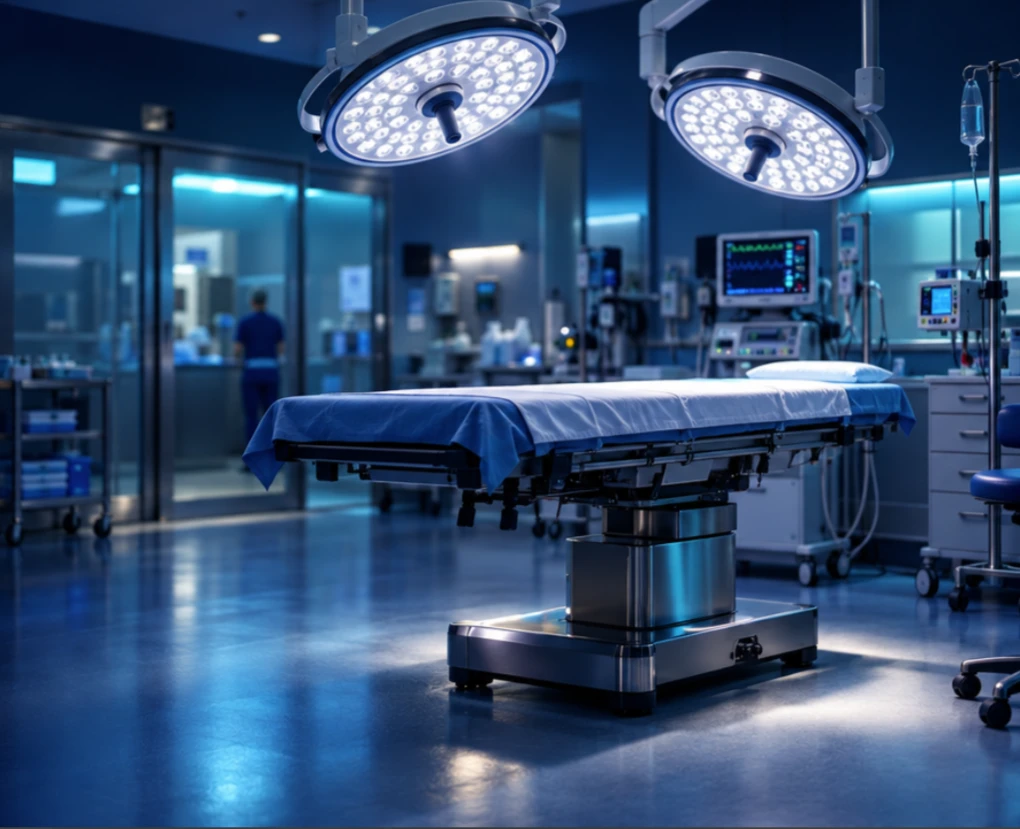
For many ASCs, those decisions aren’t nearly as simple.
They’re running lean operations, often with limited space, smaller teams, and a much greater need to make every investment count.
And it’s not just about the initial purchase price.
There’s the cost of maintaining equipment, the space it occupies, the people needed to operate it, and what happens when that equipment isn’t available.
We’ve also seen manufacturers offer technology through purchasing commitments, bundled agreements, and other arrangements that can affect a facility’s flexibility.
Some of those arrangements make sense. Others deserve a closer look, particularly when they limit purchasing options or create additional costs down the road.
I’ve been on the industry side of these discussions for a long time. I understand why manufacturers structure their business this way.
But I also understand why ASC owners and administrators need to look at the entire picture.
The question shouldn’t simply be whether an ASC can afford a piece of equipment. It should be whether that equipment makes good business sense for the facility.
Space, Staffing, and Scheduling: The Anterior Hip Replacement Table
Let’s take direct anterior hip replacement as an example.
Traditional specialty positioning tables (often called anterior hip replacement tables) have played an important role in the development of this approach. But they’re also large, expensive pieces of equipment that can create challenges for facilities with limited operating room space.
They need to be stored, moved, cleaned, maintained, and operated by people familiar with their use.
And when a facility has only one specialty table, scheduling can become dependent on that equipment being available.
Now consider what that means for an ASC trying to grow its joint replacement program.
Can the facility easily move equipment between rooms? Does it need to dedicate a room to anterior hips? What happens if the table needs repair? Is the right staff available for every case?
These may not be the questions that generate excitement at a medical technology conference, but they’re the questions that matter when you’re trying to run an efficient surgical center.
And they’re exactly the kinds of problems I believe our industry should be working harder to solve.
We Also Need to Talk About the Staff
One thing I’ve learned over the years is that the people working alongside surgeons don’t always get enough consideration when new equipment is introduced.
Nurses and other operating room personnel are responsible for a tremendous amount before, during, and after a procedure.
Yet we sometimes introduce technology that adds to their workload without fully appreciating what we’re asking them to do.
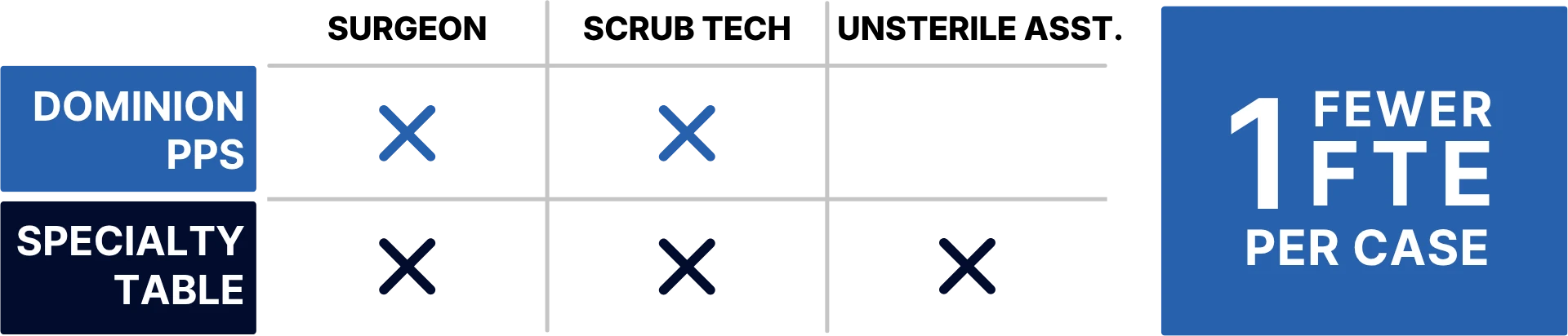
With traditional anterior hip positioning tables, someone outside the sterile field is typically responsible for making positioning adjustments at the surgeon’s direction.
That requires communication, familiarity with the equipment, and attention from someone who may have other responsibilities in the room.
In some situations, industry representatives have even been asked to assist with functions that should remain the responsibility of appropriately authorized clinical personnel.
That’s an issue worth discussing, particularly from the standpoint of facility policies, appropriate roles, and risk management.
I’ve always believed that when we’re evaluating technology, we should listen just as carefully to the nursing staff as we do to the surgeons.
They’re often the first to identify the everyday problems that others have simply learned to accept.
A Different Approach to Anterior Hip Positioning
At Dominion Surgical, we’ve focused on addressing some of the longstanding challenges associated with patient positioning during direct anterior hip replacement.
Our approach wasn’t about adding more technology to the operating room. It was about finding a more practical way to do something that’s been done the same way for years.
The Dominion Patient Positioning System was designed to give surgeons direct control of operative-leg positioning from within the sterile field, rather than relying on someone outside that field to make the adjustments.
It’s also designed to work with existing compatible surgical tables, without requiring a large, dedicated specialty table.
The system can be disassembled for storage and moved between rooms, giving facilities more flexibility in how they use their operating space.
And we’ve approached pricing with the understanding that ASCs have to be particularly thoughtful about capital purchases.
Think about what that combination could mean for a center performing anterior hip replacements.
Less dependence on a large piece of dedicated equipment. More flexibility in scheduling. Less need for staff involvement in positioning adjustments. And an opportunity to address several operational challenges without introducing another major capital expense.
None of those considerations is particularly glamorous.
But they’re real problems, and solving them can have real value.
That’s why we’ve taken a deliberate approach to evaluating Dominion with surgeons and their staff, listening to their feedback, and refining the system as we introduce it commercially.
Value Has to Mean More Than the Price Tag
I think we sometimes get too focused on the price of a device without looking closely enough at what it costs to use it.
A lower purchase price is certainly important, especially for an ASC.
But so is the ability to move equipment between rooms, reduce unnecessary handling, simplify scheduling, and allow staff to concentrate on their other responsibilities.
Those things have value, too.
And when you’re operating on the tighter margins and leaner staffing models common to many ASCs, they can become just as important as the capital investment itself.

That’s one of the reasons I believe Dominion has such a compelling opportunity in this market.
We’re not asking facilities to adopt technology simply because it’s new.
We’re offering a different approach to a familiar problem, with a design that considers the surgeon, the staff, and the business realities of the facility.
It’s Time to Think More Like an ASC
As more orthopedic procedures move into ambulatory surgery centers, I believe manufacturers need to spend more time understanding how these facilities actually operate and what they need to be successful.
An ASC isn’t simply a smaller hospital.
It has its own challenges, its own economics, and its own priorities.
And the technology we bring into those facilities should reflect that.
I don’t believe every meaningful innovation needs to involve a robot, a major capital purchase, or another layer of complexity.
Sometimes the biggest opportunity is to take a problem that’s been around for years and find a simpler, more practical way to solve it.
That’s the approach we’re taking at Dominion Surgical.
And it’s why we believe there’s a significant opportunity for technologies developed with the realities of the ASC environment in mind. See how Dominion supports ASC programs, or explore the Dominion Patient Positioning System.
Common Questions
Can an ASC perform anterior hip replacement without a dedicated specialty table?
Yes. The Dominion Patient Positioning System is designed to work with existing compatible surgical tables, so a center doesn’t need to dedicate a room or a large table to anterior hips.
Who adjusts the leg during an anterior hip replacement?
With traditional specialty tables, a team member outside the sterile field typically makes adjustments at the surgeon’s direction. Dominion’s system is designed to put that control in the surgeon’s hands, from within the sterile field.
What should an ASC weigh beyond the purchase price?
Storage space, room flexibility, maintenance, staff time, and what happens to the schedule when a piece of equipment is unavailable.
Want to see it in person? Visit one of our training sites or contact us to request a demonstration.
Albert Nanni
Chief Executive Officer, Dominion Surgical
References
1. Owen TM, Horberg JV, Corten K, Moskal JT. The off-table technique increases operating room efficiency in direct anterior hip replacement. Arthroplasty Today. 2022;15:167-173.
2. Ambulatory Surgery Center Association. Home. Accessed December 4, 2025. https://www.ascassociation.org/home
Individual results may vary. Technique and outcomes are at the discretion of the operating surgeon.