Frequently Asked Questions
Patient Positioning System FAQ
How does the Dominion Patient Positioning System improve femoral exposure during direct anterior THA?
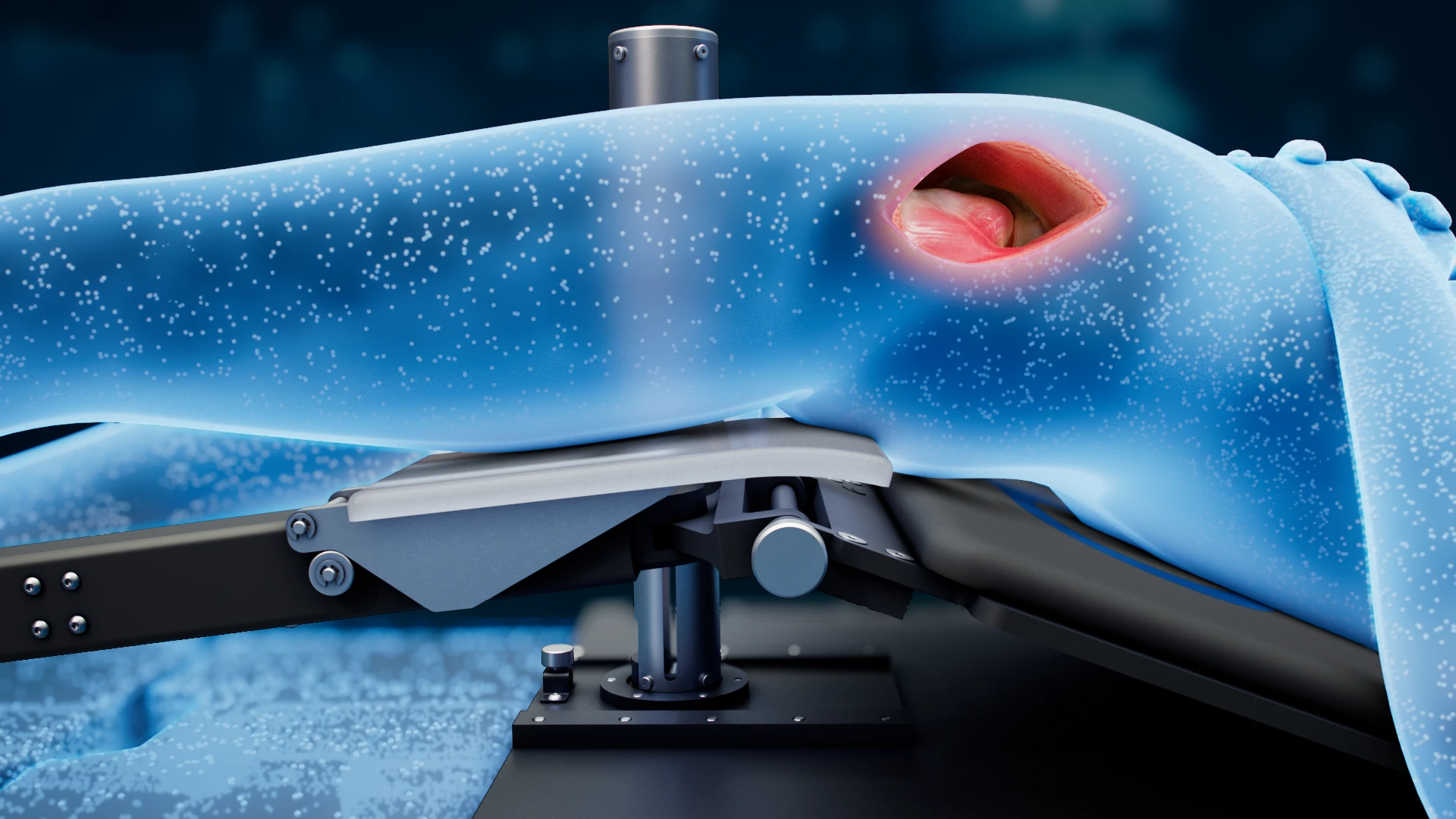
Femoral exposure is often the rate-limiting step in direct anterior total hip arthroplasty. The Dominion Surgical System combines precise, surgeon-controlled positioning with a patented femoral lift designed to elevate the femur from below. Unlike systems that rely on pulling the femur upward with a power hook, the femoral lift pushes upward to support controlled elevation and exposure. Surgeons can also make real-time adjustments to pelvic, hip, and limb positioning, helping make femoral preparation more efficient and reproducible.
Why is surgeon control of leg positioning important during anterior hip replacement?
During DAA THA, subtle changes in rotation or extension can significantly alter exposure and implant access. When the operating surgeon controls positioning directly, those adjustments happen immediately and intentionally. That improves procedural flow and reduces the friction that comes from repeated verbal instructions to non-sterile or non-experienced staff.
How can a dedicated positioning system help with component accuracy?
Accurate cup inclination, anteversion, offset restoration, and leg length assessment all depend on consistent pelvic orientation and reproducible limb positioning. A stable, technology-independent, radiolucent platform gives the surgeon reliable references throughout the case, particularly when using fluoroscopy or templating to confirm reconstruction goals.
Does the Dominion Patient Positioning System help reduce operative time?
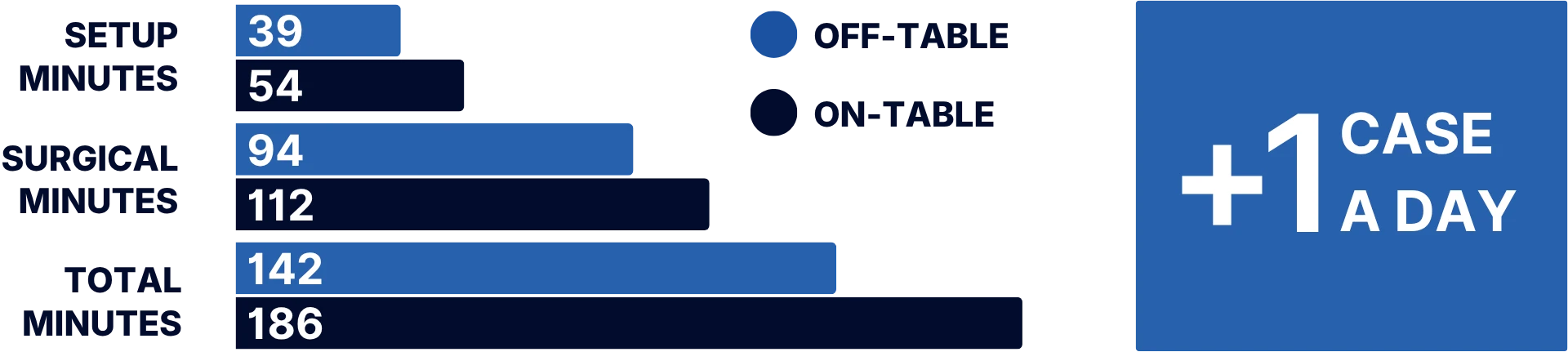
Efficiency gains in anterior THA usually come from eliminating small delays that accumulate during the procedure. Faster positioning, real time adjustments by the operating surgeon, more predictable femoral exposure, and less dependence on additional staff can shorten operative and nonoperative portions of the case and create a smoother overall workflow. Individual results may vary. Technique and outcomes are at the discretion of the operating surgeon.
Peer-Reviewed Evidence: Off-table techniques reduce operating room time by 43 minutes per case, enabling +1 case/day¹
Owen TM, Horberg JV, Corten K, Moskal JT. The off-table technique increases operating room efficiency in direct anterior hip replacement. Arthroplasty Today. 2022;15:167-173.
How does this system compare with using a standard operating room table for anterior THA?
Standard OR tables can work for selected surgeons, but they often require additional manual assistance and may offer less precise control during femoral exposure. A purpose-built patient positioning system is designed specifically for the motions required during DAA arthroplasty, helping the surgeon achieve exposure in a more controlled and repeatable manner.
Is this useful for surgeons early in their anterior approach learning curve?
Yes. Surgeons early in their careers can benefit from having complete control of the operative leg throughout the procedure. With the Dominion Patient Positioning System, the surgeon can make precise, real-time positioning adjustments independently, helping reduce variability and allowing greater focus on exposure, technique, and soft tissue management.
Can an advanced positioning system improve surgeon ergonomics?
Anterior THA can become physically demanding when exposure requires repeated manual manipulation of the extremity. Controlled mechanical positioning reduces unnecessary force and awkward body mechanics, which can lessen surgeon fatigue over the course of a full operative day.
How does surgeon-controlled positioning affect OR team dynamics?
When positioning changes are intuitive and immediate, communication becomes simpler and the team can stay focused on their primary responsibilities. Scrub staff remain engaged in the sterile field, anesthesia is less disrupted, and circulating staff are not repeatedly pulled away for table adjustments.
Is the Dominion Patient Positioning System beneficial in the ambulatory surgery center setting?
Absolutely. In ASCs, efficiency, room turnover, and lean staffing models are critical. A compact, purpose-built positioning platform that streamlines anterior THA workflow can help surgeons maintain throughput while supporting the clinical demands of same-day arthroplasty.
Why should experienced anterior hip surgeons consider changing their current setup?
Even experienced surgeons often adapt their technique around the limitations of their equipment. A system designed specifically for anterior hip arthroplasty may allow more efficient exposure, smoother workflow, improved ergonomics, and greater intraoperative control. For high-volume surgeons, even small improvements per case can become meaningful over time.
How does the Dominion Patient Positioning System differ from legacy anterior hip tables?
Legacy specialty tables helped standardize direct anterior THA, but many surgeons now want greater simplicity, improved workflow, and more intuitive intraoperative control. The Dominion Patient Positioning System is designed around modern arthroplasty efficiency—focusing on surgeon-directed positioning, streamlined setup, and reduced dependence on multiple staff members during critical portions of the case.
How does Dominion compare with newer minimalist positioning systems?
While newer minimalist systems may reduce equipment footprint, many still retain the same reliance on outside sterile operators for positioning adjustments. The Dominion Patient Positioning System takes a different approach by giving the surgeon direct control throughout acetabular and femoral preparation. Rather than simply reducing the size of traditional positioning technology, the system was designed to address the underlying workflow challenges with greater surgeon control and procedural integration.
Why would a surgeon experienced on a legacy specialty table consider switching?
Many surgeons become highly efficient on a legacy specialty table, but experience also reveals where time is lost: setup complexity, communication delays for adjustments, room footprint, or maintenance burdens. A newer system may offer the same exposure goals with fewer workflow obstacles. For high-volume surgeons, even small efficiency gains per case can be meaningful.
How does room footprint compare with larger legacy tables?
The Dominion Patient Positioning System has a total weight of approximately 30 pounds and is designed with a significantly smaller footprint than traditional specialty tables. The system breaks down for convenient storage in a suitcase-sized case or can be stored on an OR shelf, helping conserve valuable operating room space and simplify storage between procedures.
What about staffing compared with older systems?
Some legacy systems rely heavily on circulating staff or additional personnel for repeated adjustments during the case. A surgeon-controlled platform can reduce those interruptions and allow the team to stay focused on their primary responsibilities. In lean staffing environments, that advantage becomes even more relevant.
Will switching tables require changing my surgical technique?
Some workflow adjustment is expected when adopting new surgical technology. The Dominion Patient Positioning System, however, was designed and validated with extensive input from experienced traditional specialty table users. Their feedback helped ensure the system integrates with familiar anterior approach techniques, resulting in minimal changes to established surgical workflow.